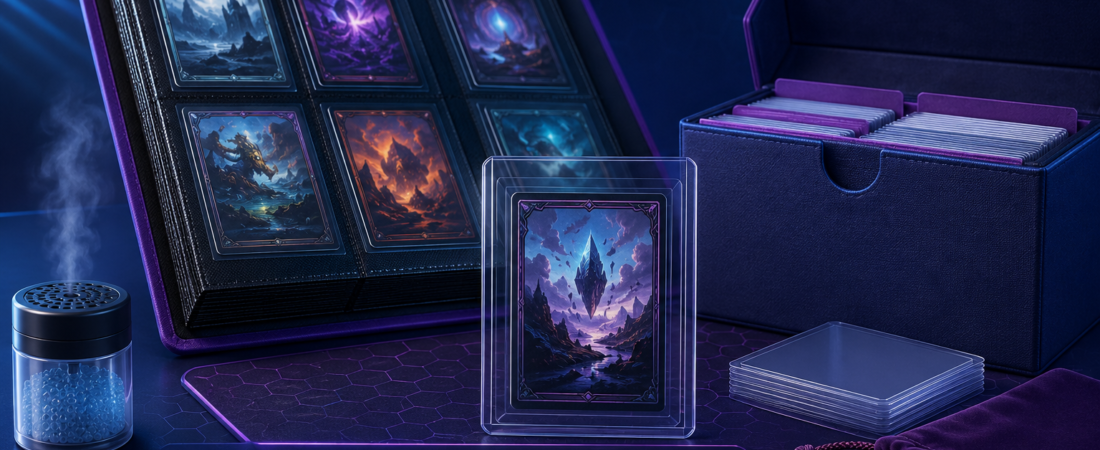
Learn how to store Pokémon cards using sleeves, binders, rigid holders and suitable environmental conditions to reduce preventable damage.
Knowing how to store Pokémon cards can help reduce scratches, edge wear, bending, fading and moisture damage. Good storage cannot repair an already damaged card, but it can protect its current condition from preventable handling and environmental risks.
The appropriate storage method depends on the card’s value, condition and how often you want to view it. A low-cost binder card may need different protection from a valuable graded card, but every collection benefits from clean sleeves, stable storage and careful handling.
Our guide to how card condition affects Pokémon card value explains why scratches, edge wear and moisture damage can influence valuation.
Why storage matters
Pokémon cards are made from layered printed materials that can react to handling, pressure, moisture, heat and light.
Common storage-related problems include:
- Edge whitening
- Scratched surfaces
- Bent corners
- Creases
- Warping
- Fading
- Moisture staining
- Mould
- Dust
- Adhesive damage
- Pressure marks
- Cards sticking together
Damage can occur slowly. A binder that appears safe today may place pressure on cards as it fills, while a storage box kept in a humid garage may expose the collection to repeated environmental changes.
Start with clean, dry hands
Wash and dry your hands before handling cards.
Skin oils, moisture, lotions and food residue can transfer to card surfaces. Avoid handling cards immediately after applying hand cream or sanitiser.
Hold cards gently by their edges when possible. Do not pinch the corners or slide cards across rough surfaces.
Clean cotton gloves are sometimes used for archival materials, but they can reduce dexterity and catch card edges. For ordinary card handling, clean and completely dry hands are generally easier to control.
Use a clean workspace
Before sorting or sleeving cards:
- Clear the table.
- Remove drinks and food.
- Wipe away dust and grit.
- Ensure the surface is dry.
- Use a clean playmat or soft surface.
- Keep pets and young children away from valuable cards.
- Work under good lighting.
A tiny particle trapped inside a sleeve can scratch a foil surface when the card moves.
Penny sleeves and soft card sleeves
A soft card sleeve is the basic protective layer for many collections.
Sleeves help protect against:
- Fingerprints
- Dust
- Light surface scratches
- Minor edge contact
- Friction inside binders or rigid holders
Choose sleeves designed for standard trading-card dimensions. The sleeve should hold the card securely without requiring force.
A sleeve that is too tight can catch corners or create pressure. A sleeve that is excessively loose may allow the card to move and expose its edges.
Sleeving a card safely
To insert a card:
- Hold the sleeve open without stretching it aggressively.
- Align the bottom corners of the card with the sleeve opening.
- Lower the card slowly.
- Stop if a corner catches.
- Reposition rather than forcing it.
- Check for trapped dust or debris.
Do not press directly on the artwork or foil surface to push the card into place.
For removal, open the sleeve gently and allow the card to slide toward your other hand. Avoid pulling one exposed corner.
Perfect-fit sleeves
Perfect-fit or inner sleeves are designed to fit closely around a card.
They are often used for double-sleeving, where the inner sleeve is placed inside a second standard sleeve. This can provide additional protection against dust and accidental moisture exposure.
However, very tight sleeves can be difficult to apply and remove. Test the fit using an inexpensive card before using them on valuable cards.
Do not force a card into a sleeve that feels too small. Pressure around the edges or corners can create damage.
Double-sleeving
Double-sleeving uses an inner sleeve and an outer sleeve, often inserted from opposite directions.
Potential advantages include:
- More protection from dust
- Reduced exposure through the sleeve opening
- Additional surface protection
- A more secure fit in some binders or holders
Potential disadvantages include:
- Greater thickness
- More pressure in crowded binder pockets
- Increased handling during insertion
- Possible bending if the two sleeves fit poorly
Double-sleeving is optional. One suitable sleeve stored correctly may be safer than an overly tight double-sleeve system.
Top loaders
A top loader is a rigid or semi-rigid plastic holder that provides more structural support than a soft sleeve.
Place the card in a soft sleeve before inserting it into a top loader. An unsleeved card can rub against the rigid plastic and become scratched.
Top loaders can help protect against:
- Bending
- Corner impacts
- Surface contact
- Ordinary handling
- Light pressure
They are useful for higher-value raw cards, shipping and individual storage.
Inserting a sleeved card into a top loader
Hold the top loader by its edges and guide the sleeved card into the opening.
Do not strike the holder against the table to force the card downward. Repeated tapping can shift the card inside the sleeve or damage corners.
If the fit is unusually tight:
- Confirm that the holder is the correct size.
- Check that the sleeve is not folded.
- Remove trapped air carefully.
- Use another holder rather than forcing the card.
A removable pull tab attached to the sleeve—not the card—can make retrieval easier, provided the adhesive never touches the card.
Semi-rigid card holders
Semi-rigid holders provide support while remaining more flexible than standard top loaders.
They are commonly used for card submissions because they can hold a sleeved card securely and allow careful removal.
As with top loaders, sleeve the card first. Use the holder size recommended for the card and intended purpose.
Do not insert multiple cards into one semi-rigid holder unless the product is specifically designed for that use.
Magnetic holders
Magnetic or one-touch holders are rigid cases that close around the card.
They can offer attractive display and strong structural protection, but correct sizing is important. A holder that is too shallow may compress the card, while a holder that is too deep may allow movement.
Some holders are designed to accommodate a card in a thin inner sleeve. Others are intended for an unsleeved card. Follow the manufacturer’s sizing instructions.
Check that:
- The card sits flat.
- Corners do not contact the holder’s closing edges.
- The case contains no dust.
- The magnet closes without excessive force.
- The card does not move freely when the holder is handled.
Avoid placing adhesive labels directly on a holder if they could leave residue near the opening.
Team bags and outer sleeves
A resealable team bag or outer sleeve can be placed around a top loader or graded holder.
This additional layer can help reduce:
- Dust entering the holder
- Scratches on the outer case
- Labels or tabs catching on nearby items
- Accidental card movement during transport
The adhesive strip should not contact the card or its inner sleeve. Replace damaged or dirty outer bags rather than repeatedly applying tape.
Choosing a binder
Binders are convenient for set collecting and viewing, but binder design affects card safety.
Look for:
- Side-loading pockets
- Archival-quality, PVC-free pages
- A ringless or fixed-page design
- A secure cover
- Pages that lie relatively flat
- Enough capacity without overfilling
- A zipper closure when extra dust protection is desired
Side-loading pockets can reduce the chance of cards sliding out when a binder is carried.
Ring binders
Traditional ring binders can be used carefully, but the rings may press into pages and cards if the binder is overfilled or stored incorrectly.
Potential problems include:
- Page dents near the rings
- Cards bending when pages catch
- Uneven pressure
- Pages sagging during vertical storage
- Binder rings opening or misaligning
If using a ring binder:
- Avoid overfilling it.
- Use high-quality pages.
- Turn pages gently.
- Ensure pages are properly seated.
- Store it so the page block remains supported.
- Check cards near the rings regularly.
Ringless binders are often simpler for long-term collection storage.
Avoid overfilling binder pockets
Do not place several cards in one pocket unless the page is designed for that capacity.
Overfilling can stretch the pocket and create pressure on the cards. It can also make removal difficult and cause edge damage.
Store one sleeved card per pocket when possible.
If displaying the front and back of separate cards, use dedicated pockets rather than forcing cards together.
Binder storage position
Store binders in a stable position where they cannot slump, bend or fall.
A binder stored upright should be supported like a properly shelved book. Avoid allowing it to lean at a sharp angle.
Large or heavy binders may be safer stored flat, provided they are not placed beneath heavy objects and are not stacked excessively.
Whichever position you choose, inspect the binder occasionally for page warping and pressure marks.
Card storage boxes
Trading-card storage boxes are useful for larger collections.
Choose a box that:
- Fits sleeved cards appropriately
- Keeps cards upright without bending
- Has dividers
- Protects against dust
- Is clean and dry
- Does not contain exposed adhesive
- Is strong enough for its contents
Use dividers to prevent cards from falling sideways when the box is not full. Dividers should be smooth and tall enough to handle without scraping cards.
Do not pack cards so tightly that removal requires pulling force.
Avoid unsafe plastics
Not all plastic storage products are equally suitable for long-term use.
Prefer products marketed for archival or collectible-card storage and made from stable materials such as polypropylene, polyethylene or polyester.
Avoid PVC-based pages and sleeves. PVC can become unstable over time, and some products may become sticky, cloudy or transfer plasticisers.
Also avoid unidentified soft plastics with a strong chemical smell.
“Acid-free” and “PVC-free” are useful descriptions, but product quality still varies. Purchase storage supplies from reputable manufacturers and sellers.
Avoid adhesives and tape
Never apply adhesive tape, glue, labels or sticky notes directly to a card.
Adhesives can cause:
- Staining
- Surface loss
- Residue
- Discolouration
- Layer separation
- Attraction of dirt
If labelling a sleeve or holder, place the label where it cannot touch the card. Use removable outer bags when possible.
Do not attempt to repair a torn or peeling card with household tape.
Temperature and humidity
Store cards in a cool, dry and stable indoor environment.
The greatest risk often comes from repeated extremes and rapid changes rather than one ordinary room-temperature reading.
Avoid locations such as:
- Attics
- Garages
- Sheds
- Damp basements
- Cars
- Window ledges
- Areas near heaters
- Areas near air-conditioning vents
- Exterior walls prone to condensation
- Rooms with known leaks
High humidity can contribute to warping, mould and cards sticking together. Extremely dry conditions can make paper-based materials more brittle.
A stable living-space environment is generally preferable to an uncontrolled storage area.
Protect cards from water
Keep collections away from:
- Plumbing
- Aquariums
- Drinks
- Open windows
- Roof leaks
- Floors at risk of flooding
- Damp walls
Do not store valuable cards directly on the floor. Use shelving that provides separation from potential spills or minor flooding.
Water-resistant outer containers can provide extra protection, but cards should not be sealed while damp or stored where condensation can form.
Light and fading
Direct sunlight and prolonged strong light can fade printed colours.
For displayed cards:
- Avoid direct sun.
- Keep displays away from windows.
- Limit the total time under strong lighting.
- Use protective display materials where appropriate.
- Rotate displayed items if preservation is important.
A UV-resistant holder may reduce some exposure but should not be treated as complete protection. Light damage is cumulative and cannot be reversed.
Cards stored in closed binders or boxes receive less routine light exposure.
Dust, smoke and air pollutants
Dust can scratch surfaces and enter open holders.
Store cards in clean, closed enclosures. Keep collections away from smoking, cooking vapours, fireplaces and strong chemical fumes.
Smoke and odours can be absorbed by paper-based materials and may affect desirability even when no visible stain appears.
Clean shelves and storage areas regularly without spraying cleaners near exposed cards.
Food, pests and mould
Food crumbs and damp conditions can attract insects and support mould growth.
Do not eat over an open collection. Keep storage areas clean and inspect boxes periodically.
Warning signs include:
- Musty odour
- Fuzzy growth
- New staining
- Insect debris
- Chewed cardboard
- Cards sticking together
- Warped pages
Separate affected items from the rest of the collection. Do not brush suspected mould indoors near clean cards.
Significant mould or water damage may require advice from a professional conservator.
Storing graded cards
For slabbed collections, our graded vs ungraded Pokémon cards guide explains what professional encapsulation does—and does not—provide.
Graded cards are protected by rigid holders, but the holders are not indestructible.
Use graded-card sleeves or outer bags to reduce scratches on the slab. Store slabs in a purpose-built box with enough support to prevent movement.
Avoid:
- Dropping slabs
- Stacking excessive weight
- Direct sunlight
- Extreme heat
- Damp areas
- Harsh cleaning chemicals
- Forcing holders into undersized boxes
Verify that each certification label remains readable and keep a separate inventory of certification numbers.
Displaying cards safely
Display can be part of collecting, but it increases exposure to light, dust and accidental impact.
Choose:
- Stable stands
- Secure frames or cases
- Indirect lighting
- Locations away from heat and moisture
- Displays that do not use adhesive on the card
- Holders that support the card evenly
Do not place valuable cards where they can fall, be handled by visitors or be exposed to direct sunlight.
Consider displaying a high-quality image or less valuable copy while keeping the original in protected storage.
Transporting a collection
Before moving cards:
- Sleeve loose cards.
- Use rigid protection for valuable raw cards.
- Fill empty space so cards cannot fall sideways.
- Keep boxes upright.
- Protect against rain.
- Avoid leaving cards in a hot or cold vehicle.
- Carry valuable items personally when practical.
- Document the contents before transport.
Do not use rubber bands around cards or holders. Rubber creates concentrated pressure and can degrade or leave marks.
Shipping individual cards
A common protective sequence for shipping is:
- Soft sleeve
- Top loader or semi-rigid holder
- Team bag or sealed outer sleeve
- Stiff support when appropriate
- Padded or rigid outer packaging
Prevent the card from sliding out of the holder without placing adhesive across the card opening where it might contact the sleeve.
Package according to the card’s value and the carrier’s requirements. Consider tracking and insurance for valuable shipments.
Keep an inventory
A collection inventory can help with organisation, insurance and loss recovery.
Record:
- Card name
- Set
- Collector number
- Language
- Finish
- Condition
- Grading company and grade
- Certification number
- Purchase date
- Purchase price
- Storage location
- Photographs
Store a backup of the inventory separately from the physical collection.
Avoid publishing certification numbers or detailed storage locations unnecessarily.
Inspect stored cards periodically
Even well-stored cards should be checked occasionally.
Look for:
- New warping
- Sleeve cloudiness
- Dust
- Moisture
- Mould
- Insect activity
- Binder pressure
- Cracked holders
- Cards slipping from pockets
- Changes in odour
Replace damaged sleeves and outer bags carefully. Do not repeatedly resleeve cards without a reason, because every handling event introduces some risk.
Common storage mistakes
Avoid:
- Storing cards unsleeved in loose piles
- Using rubber bands
- Overfilling binders
- Placing unsleeved cards in top loaders
- Using PVC pages
- Applying tape directly to cards
- Keeping cards in garages or cars
- Displaying cards in direct sunlight
- Storing boxes on damp floors
- Packing cards too tightly
- Balancing heavy objects on binders
- Using dirty or scratched sleeves
- Forcing cards into undersized holders
Expensive storage products cannot compensate for poor handling or an unstable environment.
A practical storage system
For an ordinary collection:
- Sleeve individual cards.
- Use a suitable binder for set organisation.
- Place higher-value raw cards in sleeves and rigid holders.
- Store graded cards in slab sleeves and a fitted box.
- Keep boxes and binders in a cool, dry indoor cupboard or shelf.
- Avoid sunlight, water and excessive pressure.
- Maintain an inventory.
- Inspect the collection periodically.
The system should be easy enough to maintain consistently. Complex protection that requires frequent handling may create more risk than a simple, reliable setup.
Storage and card value
When checking whether proper storage has preserved a card’s value, remember the difference between market price and asking price.
Storage does not guarantee that a card’s value will rise.
Its purpose is to help preserve physical condition. Market value can still change because of supply, demand, popularity, reprints and broader collector interest.
When researching prices, compare the stored card with examples in similar condition and the same grading status.
A clean holder does not prove that the card inside is Near Mint, and protective storage cannot erase earlier damage.
Using CardQuanta responsibly
Before researching value, confirm the exact version using our guide to identifying the correct Pokémon card printing.
CardQuanta provides available card information and marketplace pricing for research purposes.
CardQuanta does not inspect stored cards, authenticate protective products or guarantee that a storage method will prevent all damage. Choose supplies appropriate to the specific card and follow the manufacturer’s instructions.
If a card is unusually valuable, historically important, mould-affected or severely damaged, consider seeking specialist conservation or insurance advice.
The key takeaway
Safe Pokémon card storage combines suitable enclosures, careful handling and a stable environment.
Use clean sleeves, avoid PVC and adhesives, support cards with binders or rigid holders, and keep the collection away from direct sunlight, water, heat and humidity extremes.
The goal is not to make cards indestructible. It is to reduce avoidable risks and preserve their current condition for future collecting, display or sale.