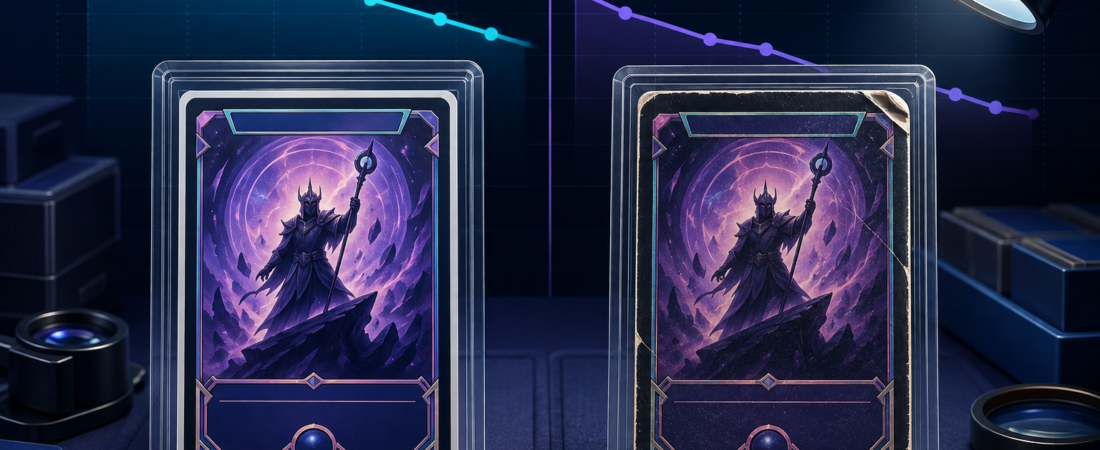
Learn how corners, edges, surfaces, centering and different condition grades can affect a Pokémon card’s value.
Card condition can have a major effect on Pokémon card value. Two copies of the same printing may look similar at first glance, yet sell for very different prices because of wear, damage or overall presentation.
Collectors commonly examine a card’s corners, edges, surfaces and centering before deciding what they are willing to pay. Understanding these areas can help you compare listings more accurately, describe your cards honestly and avoid using the value of a cleaner copy for a damaged one.
If you are beginning your research, our guide to how Pokémon card prices work explains the other factors that contribute to a card’s estimated value.
Why condition affects card value
Collectible cards are physical objects. They can be scratched, bent, marked, faded or damaged by moisture, handling and improper storage.
Collectors often prefer cards that appear close to the condition they were in when removed from the original pack. As visible flaws increase, the number of interested buyers may decrease, and buyers may expect a lower price.
The size of the difference depends on the card. A small flaw may create a substantial price reduction for a highly valuable or condition-sensitive card. The same flaw may have a smaller financial effect on an inexpensive card.
Condition is therefore not a fixed percentage adjustment. It must be considered together with the card’s rarity, demand, age and available comparable sales.
The main areas to inspect
A careful condition assessment should include the entire card—not only the front artwork.
Examine the card under good lighting and inspect it from several angles. Some scratches, dents and print lines become visible only when light reflects across the surface.
The main areas to check are:
- Corners
- Edges
- Front surface
- Back surface
- Centering
- Creases and dents
- Print quality
- Colour and gloss
- Moisture or environmental damage
- Alterations or writing
Corners
Corners often show some of the earliest signs of wear. Damage may include whitening, rounding, splitting, bending or small folds.
Sharp, clean corners generally support a stronger condition assessment. A card with one visibly damaged corner may be valued differently from another copy with four clean corners, even when the front artwork appears identical.
Inspect both the front and back of every corner. A corner may look acceptable from the front while showing whitening or separation on the reverse.
Edges
Edge wear commonly appears as small white marks where the printed surface has worn away. Dark-backed Pokémon cards can make this whitening especially noticeable.
Check all four edges for:
- Whitening
- Chipping
- Rough cuts
- Small dents
- Peeling or separation
- Silvering along foil areas
- Discolouration
- Damage caused by binders or sleeves
A few tiny spots may be treated differently from continuous whitening around most of the card. Marketplace condition standards can vary, so photographs remain important.
Surface scratches
Surface damage can be difficult to judge from a single photograph. Scratches may be visible on the artwork, text boxes, holofoil area or back of the card.
Holofoil surfaces can show:
- Fine scratches
- Scuffing
- Cloudiness
- Print lines
- Dents
- Pressure marks
- Loss of gloss
A seller’s photograph taken directly from above may hide some of these issues. Angled lighting often reveals more detail.
Not every line is necessarily handling damage. Some marks can originate during manufacturing. However, factory imperfections may still affect desirability and professional grading results.
Creases, bends and dents
Creases generally have a significant effect on condition because they alter the card’s structure. Even a light crease that is visible only from one side may move a card into a lower condition category.
Bends and warping are not always the same as creases. Some foil cards develop a curve because the card’s layers react differently to humidity. Mild curving may sometimes improve after appropriate storage, while a crease represents permanent structural damage.
Dents and pressure marks can also be serious. They may not break the printed surface, but they can become visible under angled lighting and affect grading.
Do not attempt aggressive flattening, heating or chemical treatment. These methods can cause additional damage or raise concerns about alteration.
Centering
Centering describes how evenly the printed design sits within the card’s borders.
A card may have a noticeably wider border on one side than the other. Collectors and grading companies often evaluate both left-to-right and top-to-bottom centering on the front and back.
Poor centering does not necessarily mean a card is damaged. It is usually a manufacturing characteristic. Nevertheless, it can affect the price of cards whose buyers are seeking high professional grades.
For ordinary ungraded cards, centering may have less influence than creases, scratches or heavy whitening. Its importance increases when buyers believe the card could receive a very high grade.
Print lines and manufacturing flaws
Cards can leave the factory with imperfections. Examples include:
- Print lines
- Off-centre cutting
- Rough edges
- Ink spots
- Roller marks
- Small dents
- Holofoil defects
- Misalignment
A manufacturing flaw may be different from damage caused by handling, but it can still affect the card’s appearance and grading outcome.
Some unusual manufacturing errors are deliberately collected and may command a premium when they are recognised, verifiable and desirable. Most ordinary print imperfections, however, do not automatically make a card more valuable.
Colour, fading and discolouration
Extended exposure to sunlight can fade printed colours. Moisture, smoke, dirt and unsuitable storage materials can also change a card’s appearance or smell.
Compare the card with a known genuine example when possible. Unusual colour may be caused by fading, printing variation, scanning, photography or counterfeit production.
Discolouration around the edges or surface may lower value, particularly if it cannot be removed safely. Avoid cleaning cards with water, alcohol, solvents or abrasive materials.
Water and moisture damage
Moisture can cause staining, swelling, warping, layer separation, surface texture changes or mould.
Water damage may be more visible along the edges, but it can affect the card internally as well. A card that has dried flat may still show rippling, staining or a different texture under light.
Cards with mould or strong odours should be stored separately to avoid affecting other items. Significant water damage usually places a card in a low condition category regardless of how attractive the artwork still appears.
Writing and alterations
Writing, colouring, trimming and surface restoration can substantially affect collectability.
Examples include:
- Names or initials written on the card
- Marker used to hide edge whitening
- Recoloured borders
- Trimmed edges
- Added gloss or coating
- Pressing intended to remove creases
- Replacement or alteration of card layers
An altered card should not be represented as an untouched original. Professional grading companies may reject altered cards or return them without a numerical grade.
Common condition categories
Trading-card marketplaces often use condition categories such as Near Mint, Lightly Played, Moderately Played, Heavily Played and Damaged. The exact names and definitions vary.
Near Mint
A Near Mint card generally has a clean overall appearance with minimal wear. It may have very small imperfections, but it should not have major scratches, bends, creases or extensive whitening.
Near Mint does not necessarily mean flawless or professionally grade-worthy. A Near Mint card can still have centering issues, small print defects or minor wear that prevents a top numerical grade.
Lightly Played
A Lightly Played card typically shows minor evidence of handling. This may include small areas of edge whitening, light scratches or limited surface wear.
The card should remain structurally sound and visually attractive. Significant creases, heavy scuffing or widespread damage would usually place it in a lower category.
Moderately Played
A Moderately Played card shows more noticeable wear. It may have several areas of whitening, visible scratches, surface wear or minor structural imperfections.
The card should still be identifiable and usable as a collectible, but its flaws will generally be apparent without close inspection.
Heavily Played
A Heavily Played card has substantial wear. It may show heavy whitening, scratches, bends, staining or creasing.
Some collectors purchase heavily played copies as affordable placeholders or binder cards, particularly when cleaner examples are expensive.
Damaged
A Damaged card may have severe creases, tears, water damage, peeling, writing, major staining or other structural problems.
Damage does not always make a rare card worthless. A highly desirable card may still attract buyers in poor condition, but it should be compared with other damaged examples rather than Near Mint copies.
Condition labels are not perfectly standardised
Different marketplaces, shops and individual sellers may interpret condition categories differently.
One seller’s Near Mint card may be another buyer’s Lightly Played card. Photographs and detailed descriptions are therefore essential.
When buying online:
- Examine front and back photographs
- Zoom in on corners and edges
- Look for angled-light photographs
- Read the complete condition description
- Ask for additional images when necessary
- Confirm whether the pictured card is the exact card being sold
- Review the seller’s return policy
A condition label should support the evidence shown in the listing, not replace it.
Raw condition and professional grading
An ungraded, or raw, card has not received a numerical grade from a professional grading company.
Sellers may describe raw cards using marketplace condition categories, but these descriptions are opinions rather than guaranteed professional grades.
A phrase such as “PSA 10 candidate” does not mean that PSA has examined the card or that it will receive a grade of 10. Factors that are difficult to see in photographs may affect the result.
Professional grading typically considers:
- Corners
- Edges
- Surface
- Centering
- Authenticity
- Signs of alteration
Different grading companies may use different standards and labels. Grades from separate companies should not automatically be treated as equivalent.
How condition affects price comparisons
Condition should also be considered when comparing market price vs asking price, because a seller’s requested amount may not accurately reflect the wear on the specific card.
When researching value, compare cards in similar condition.
If a Near Mint copy has a market price of $100, that does not establish a $100 value for a copy with a crease and heavy edge wear. Likewise, the sale of a damaged card should not be used as the only reference for a clean copy.
A useful comparison should match as many characteristics as possible:
- Exact card and collector number
- Set and printing
- Language
- Holofoil variation
- Graded or ungraded status
- Numerical grade, when applicable
- Overall condition
- Major flaws
Several comparable results are generally more informative than one isolated listing.
Photographing a card for sale
Clear photographs help buyers assess condition and can reduce misunderstandings.
Consider including:
- The full front
- The full back
- All four corners
- Both long edges
- Both short edges
- Angled views under light
- Close-ups of scratches, dents or creases
- The grading label and holder, if graded
Use neutral lighting and avoid filters that change the card’s colour. Do not hide flaws with glare, sleeves or selective cropping.
Storing cards to preserve condition
Appropriate storage can reduce future wear.
Common protective methods include:
- Clean card sleeves
- Rigid top loaders or semi-rigid holders
- Side-loading or quality ringless binders
- Storage boxes designed for trading cards
- A cool, dry environment
- Protection from direct sunlight
- Careful handling with clean, dry hands
Avoid rubber bands, adhesive tape, damp areas and loose storage where cards can rub against one another.
Protection cannot reverse existing damage, but it can help prevent additional wear.
A practical condition-checking process
Use this sequence when examining a card:
- Confirm that it is the exact printing you intend to value.
- Remove it carefully from sleeves that hide the edges or surface.
- Inspect the front under direct and angled lighting.
- Inspect the back in the same way.
- Check all corners and edges.
- Look for creases, dents, scratches and moisture damage.
- Assess centering separately from physical wear.
- Choose a conservative condition category.
- Compare it with cards showing similar condition.
- Record or photograph important flaws.
When uncertain between two categories, using the more conservative description can reduce the risk of misleading a buyer.
Using CardQuanta responsibly
CardQuanta provides available market-price guides and marketplace information for research purposes. The displayed figures cannot determine the condition of your specific card.
Before relying on a price, confirm the exact printing and compare it with examples in a similar condition. Active eBay listings represent sellers’ asking prices rather than confirmed sale prices.
CardQuanta does not inspect, authenticate or grade cards and does not guarantee that a card will sell for a particular amount. Final value depends on the individual card, buyer demand and the circumstances of the transaction.
The key takeaway
Condition is one of the most important variables in Pokémon card valuation.
A card’s name and collector number identify what it is, but its corners, edges, surfaces, centering and structural condition help determine how it compares with other copies.
Inspect the entire card, describe flaws honestly and compare like-for-like examples. A realistic condition assessment produces a more useful value estimate than applying a clean card’s market price to every copy.